Embutidos Hortanco
Two calibres, a five-person workshop in Tafalla.
Their products →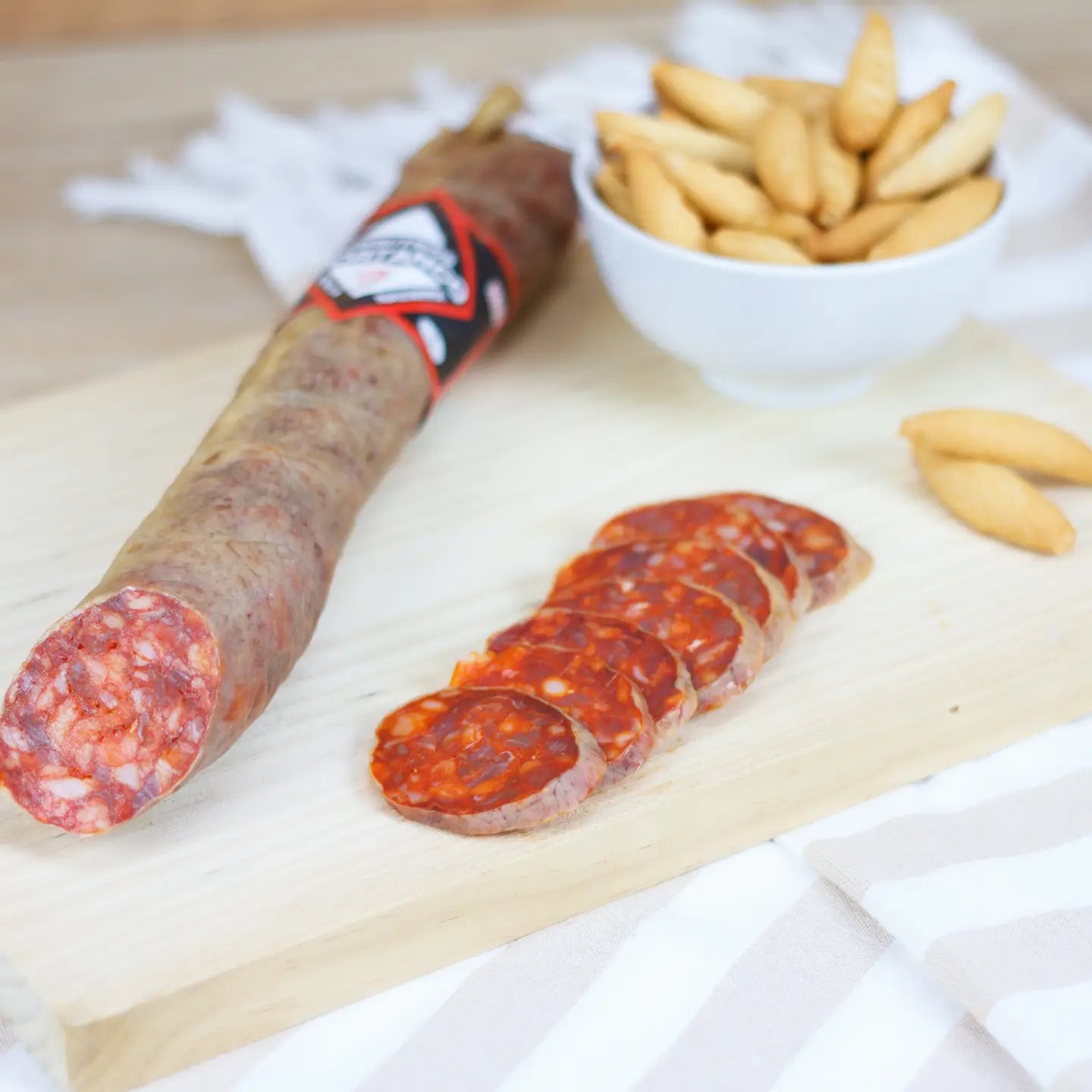
A house, a region
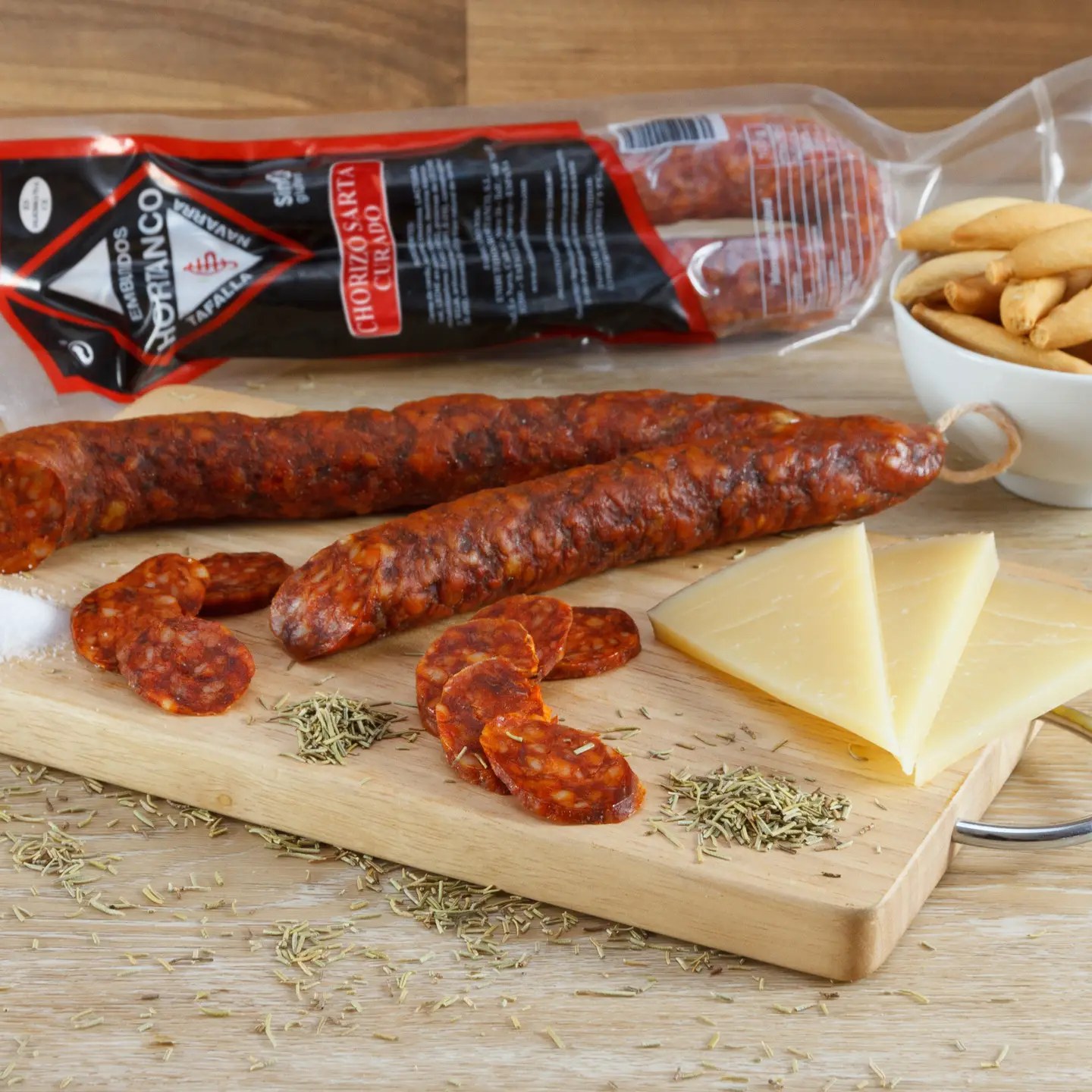
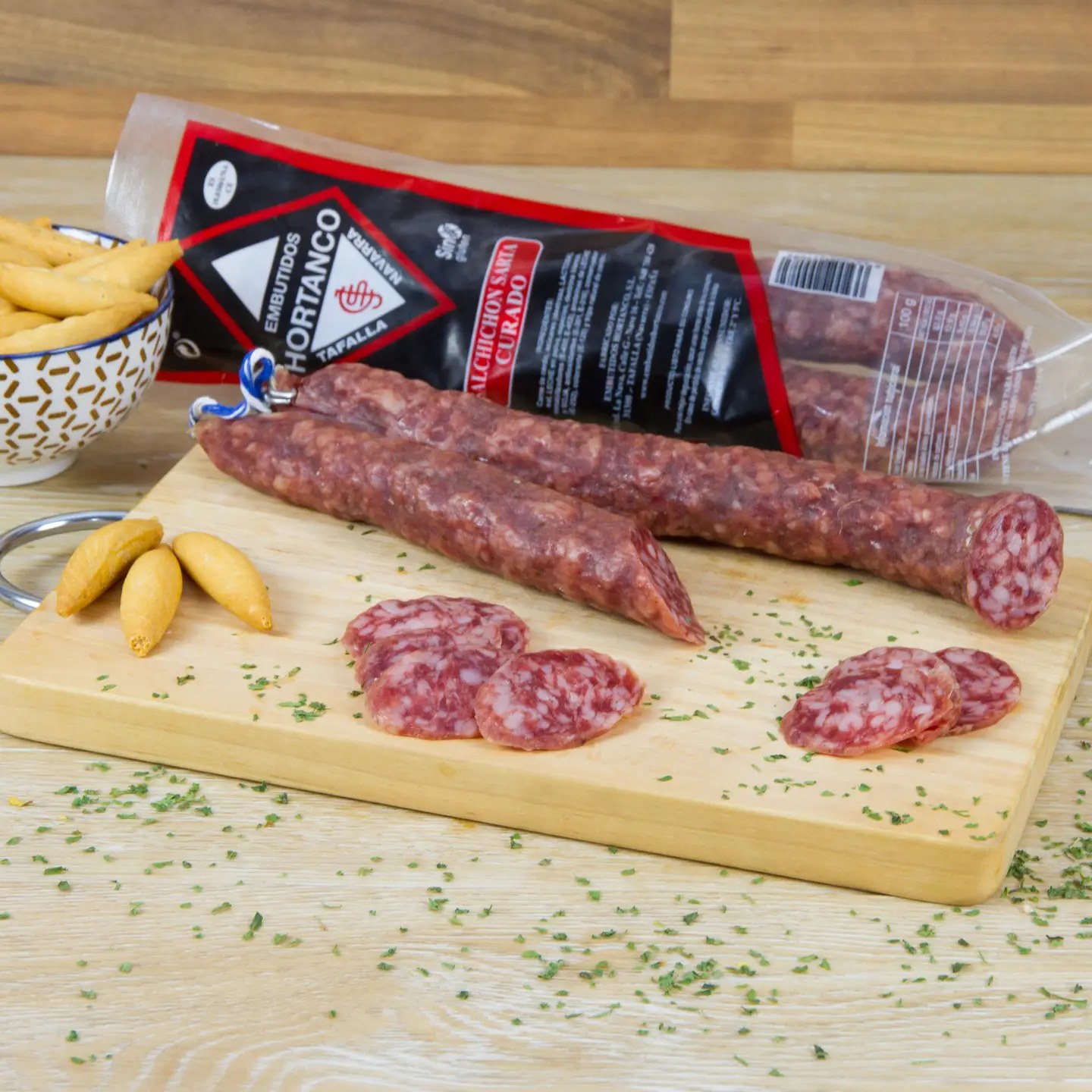
Hortanco began as a family butcher's shop in Tafalla. In the late nineteen-seventies the house built its own factory, and the first two sausages hung up to cure there were the chorizo cular and the chorizo sarta. Both are still made. Both are in this selection.
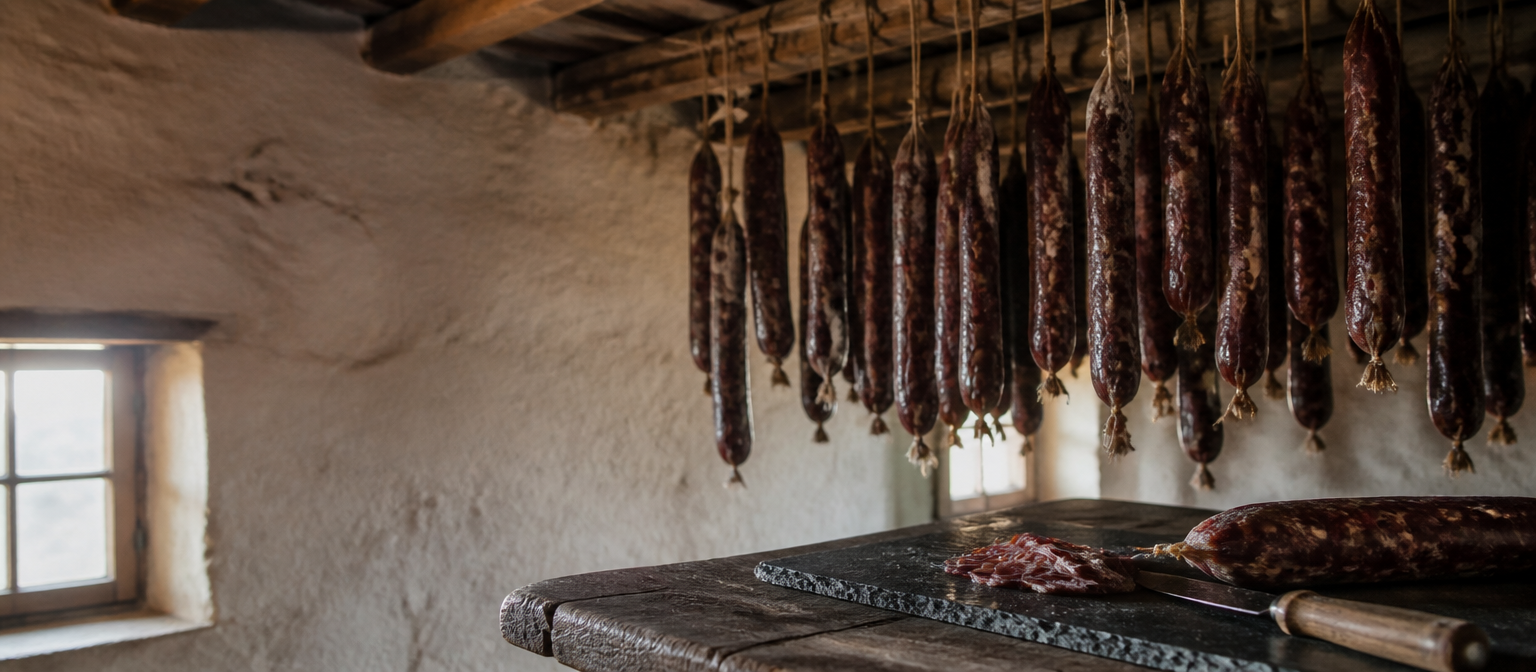
It has stayed a workshop: five people. You can see it in the drying room, where a Cular hangs for fifty days before it comes out.
Their txistorra has twice won first prize at the Navarrese Txistorra Competition, in 2012 and in 2014, and it was singled out at the Gourmet Selection fair in Paris in 2024. That is the craft of this house, judged by people who know.
How they work
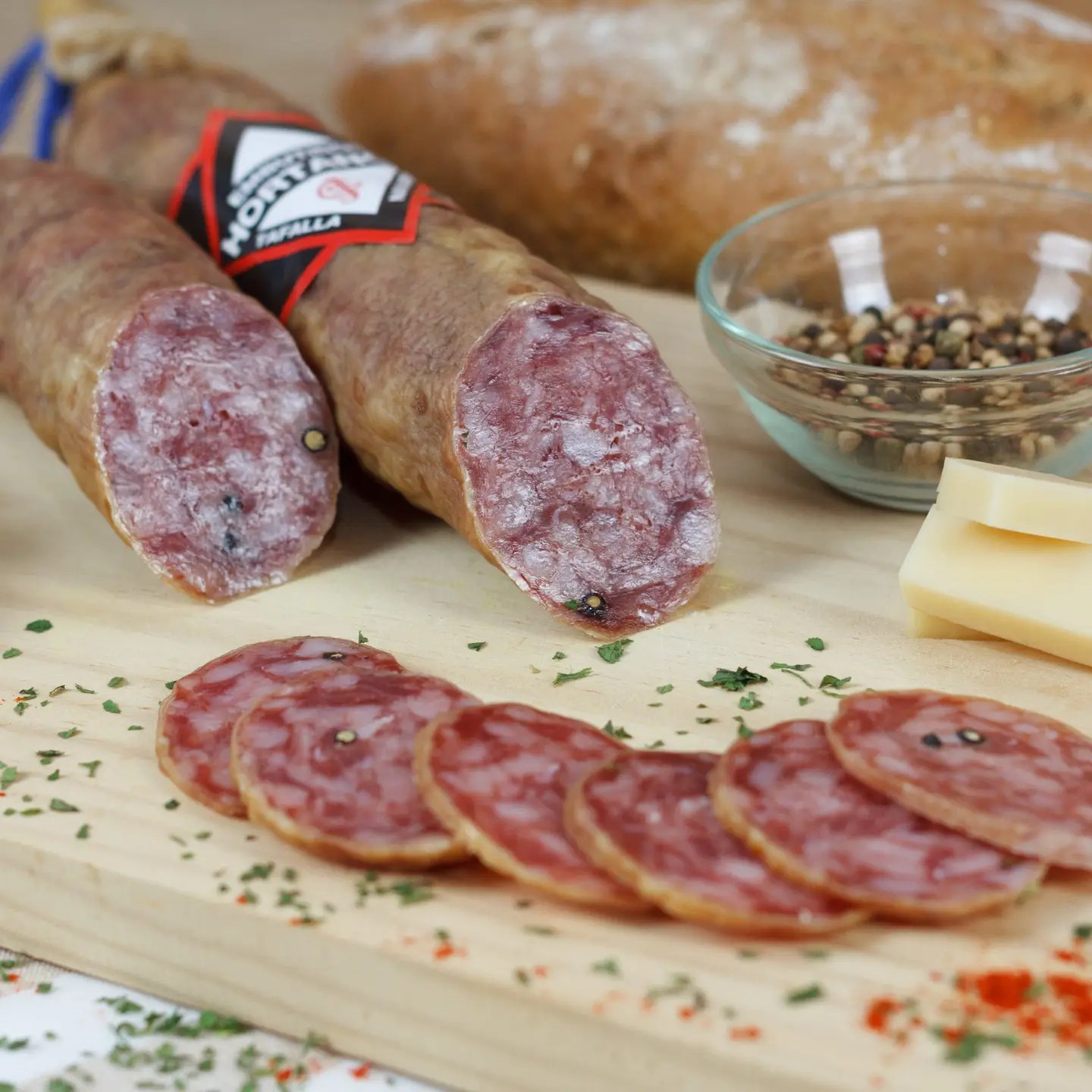
Two calibres explain the whole range. Sarta is the thin piece, folded into a horseshoe and tied at both ends. Cular is the wide piece, stuffed into the pig's thick casing, the one that forces a far longer drying. Then two seasonings: chorizo takes paprika, hence the red; salchichón takes a blend of peppers, hence the pale slice. The chorizo Sarta comes out of the drying room at twenty-one days; the Cular does not come out before fifty, at controlled temperature and humidity. Both are eaten raw, sliced thin.
Why we chose them
I have been selling Spanish food in Switzerland since 2014, and I am fussy about dry-cured meat. One detail settled it with Hortanco: the first two sausages this house ever hung up to cure, the chorizo cular and the chorizo sarta, are exactly the ones I sell today. This is not a range invented for export; it is what they have known how to make from the first day. Then there is the size — five people, one workshop in Tafalla — and a txistorra that has won the Navarrese competition twice, which tells you a great deal about the hand behind it. At home I slice the cular thin, on bread rubbed with tomato. The sarta I put on the board whole; it disappears by itself.